How We Work
OneFish TwoFish Consulting was built around a simple idea: match the right expertise to each project's needs.
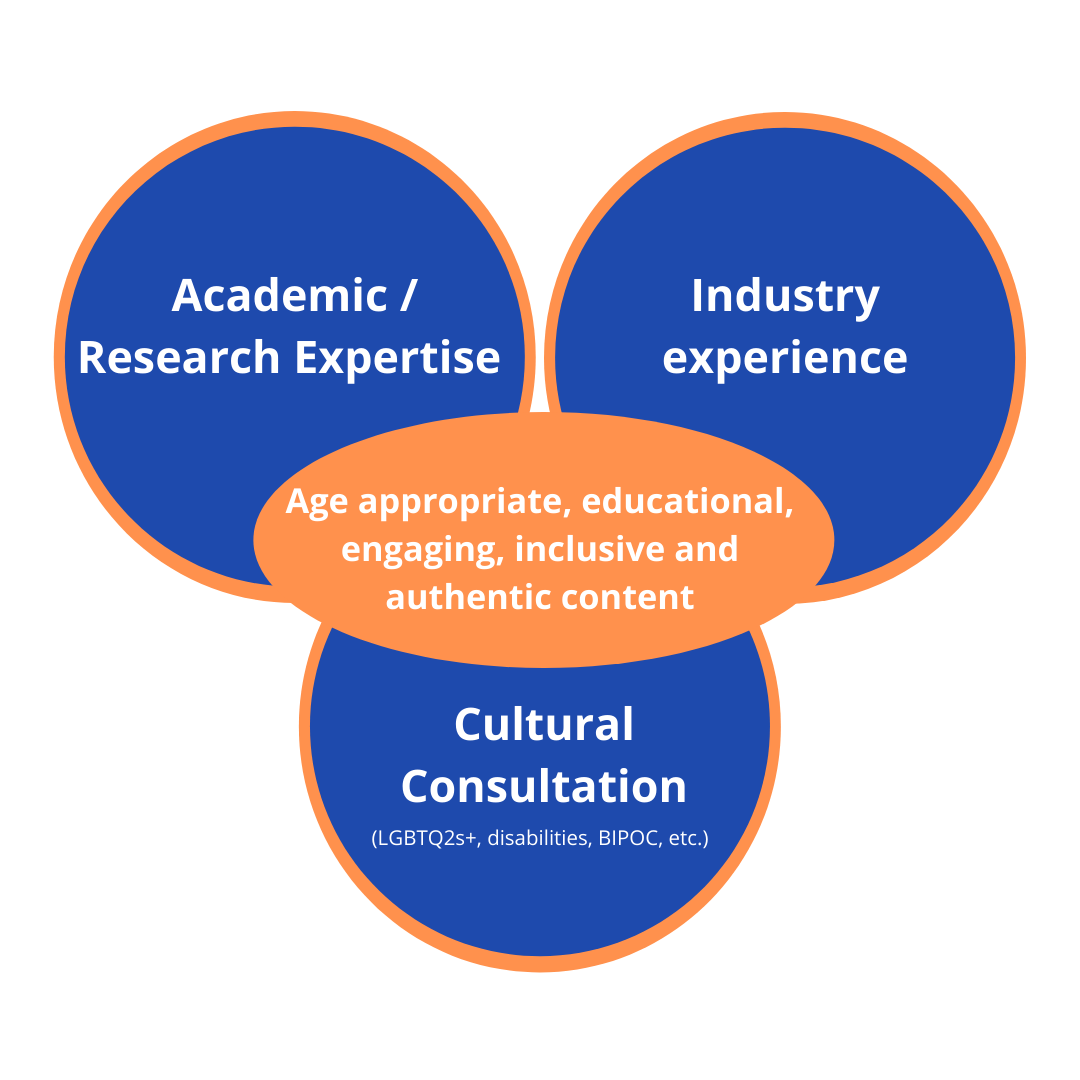
The core of our work draws on deep knowledge in child development, social science research, media literacy, and industry practice. This foundation informs everything we do - from focus testing and developmental assessments to consultative reports, curriculum notes, and feedback on shows, games, and digital content in development or production.
Where projects call for it, Kim draws on a curated network of specialists assembled to address the specific needs of your content. This network has grown alongside the industry over the years, and today spans a broad range of disciplines: from writing characters with autism and Deaf culture representation, to the incorporation of Indigenous languages in immersive media and authentic queer storytelling in linear formats. On the education side, we work with subject matter specialists, curriculum designers, anti-racism practitioners, and more.
Every specialist is brought in with intention. The goal is always the same: rigorous, thoughtful feedback grounded in evidence, delivered in service of content that genuinely resonates with and reflects young audiences.
Our Philosophy
The strongest children's media isn't made by instinct; it's made by people who stay genuinely curious about what children and youth are actually like right now. Child development doesn't pause between productions, and the gap between a creator's own childhood and the lives of today's six- or nine-year-olds is wider than most realize. Each generation is impacted by ever evolving technology, political and social change, which have impacts on their development, likes, dislikes and media preferences.
At OneFish TwoFish, the core conviction is simple: the best possible version of your project is made when you bring in the right expertise early and keep it close throughout. Not just when you're worried, and not just when the subject matter demands a specialist. A developmental lens, an understanding of how young audiences process and engage with content, and genuine familiarity with what children's lives look like today - these aren't niche additions to the process. They're what separates good content from content that truly lands and can stay with your audience/end user.
Authenticity is at the centre of our work. Not as a diversity metric, but as a quality standard. Children and youth are remarkably good at recognizing when content feels real versus when it feels like an adult's idea of what they should want. They respond to stories that reflect who they actually are, how they actually talk, and the full, complicated range of people in their worlds. Getting that right is both the creative challenge and the strategic opportunity.